trust-dancing
No content on this page itself — see linked references below.
24 linked references
December 17th, 2024
- > B was saying that it didn't matter what move they ultimately played, that was all the same, but _she needed A to acknowledge that he'd unilaterally changed an agreement, and she needed to be able to trust that A would not do that_.
- > With that, I could imagine another shape behind B's reaction. Some betrayal in her past, where someone else had unilaterally changed an agreement because _they_ thought the consequences were the same, when they were very much not the same to B, and then rejected B's objections as invalid... that this situation was now reminding her of.
a common confusion: "there's no way to satisfy this person's ask while staying in integrity" when what's actually so is "I __can't think of__ a way to satisfy this person's ask while staying in integrity"
- there's a common confusion people make when trust-dancing, where there's something that someone is asking for (eg to be understood, or to have something taken care of, or whatever) and the person they're asking feels that they can't satisfy the wish because there's no way to do so without violating something of their own
July 8th, 2022
- thread by Mark Lippmann relevant to romantic relationships trust-dancing How we get there talkaboutability
April 28th, 2022
- trust-dancing tho is happening between people before any such breakdowns have occurred, including that people are usually somewhat sussing out whether they expect one another to betray them in ways they've been betrayed by others before
January 15th, 2022
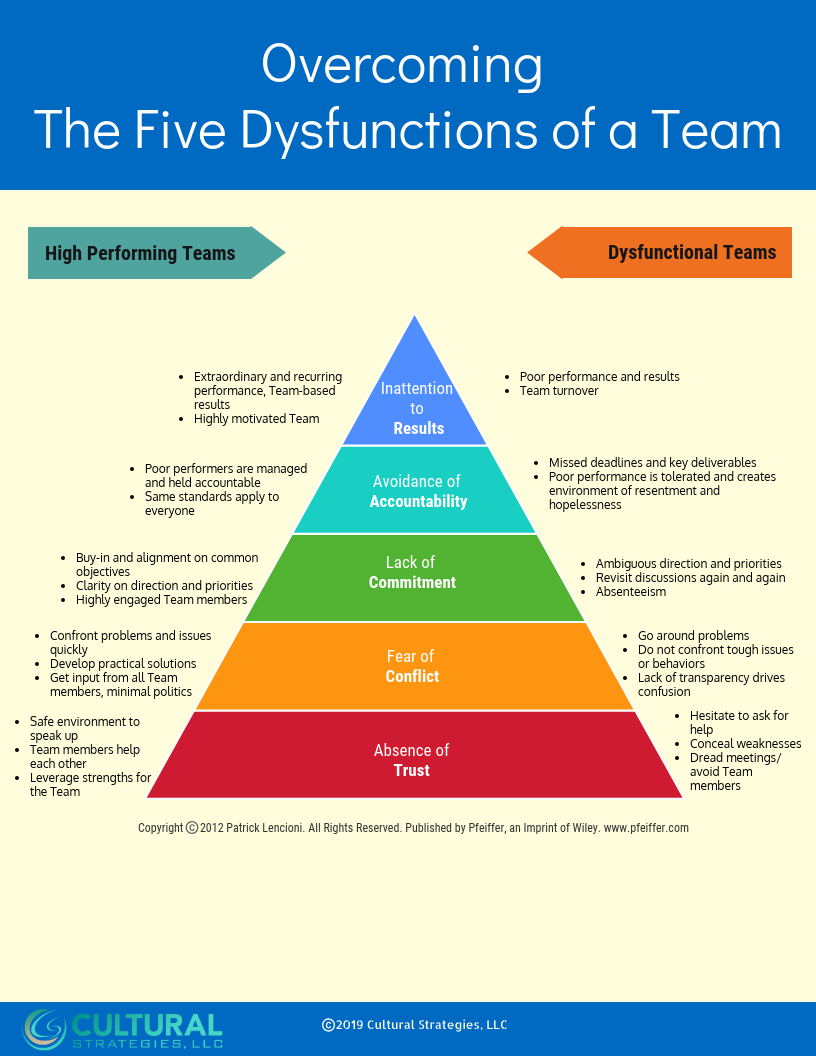
- relevant to trust-dancing - Five Dysfunctions of a Team
- "trust" maybe shorthand for "psychological safety" here
- from a friend: "psychological safety as anti-triggered" — common-knowledge that everyone has positive emotional knowledge
- or talkaboutability
- "can't address conflict-avoidance, without addressing lack of trust"
- can address a conflict (perhaps)
Podcast summaries
- Keywords: Eric Chisholm Sarah McManus Conversation As Medium blindspot feedback is hard (but possible!) ottergroup fishbowl frame dialogue frame blindspot Circling Liminal Space Agency NNTD upward spiral fuel the upward spiral nobody is to blame What is Blame? building trust out of distrust trust-dancing is an element of all human interactions Game A Game B Circling NVC NNTD has let me see how certain attempts towards trust-building will fail to build non-naive trust obvious
With Tasshin Fogleman — Podcast with Tasshin Fogleman Tra… › Outline of ideas discussed. (I'm M, Tasshin is T):
- 1:08:46 - 1:23:39 - A few principles I learned from my time with LSA upward spiral fuel the upward spiral What is Blame? nobody is to blame building trust out of distrust trust-dancing is an element of all human interactions
With Tasshin Fogleman — Podcast with Tasshin Fogleman Tra… › Outline of ideas discussed. (I'm M, Tasshin is T):
- 1:23:45 - 1:33:48 - Is NNTD and upgraded version of Upstart's ideals and methods? Liminal Space Agency trust-dancing Game A Game B CirclingNVC
With Tasshin Fogleman — Podcast with Tasshin Fogleman Tra… › Outline of ideas discussed. (I'm M, Tasshin is T):
- 2:10:17 - 2:19:12 - Experiments or practices to help you be more attuned to social dynamics, underlying trust needs and trust dancing opportunities/moments in general trust-dancing Learning how to trust yourself when all men doubt you, but make allowance for their doubting too self-trust
November 18th, 2021
- this seems like something that a memetic mediator and/or trust-dancing expert would be able to do
- > fun game you can play at events: map out the status terrain, visualise the various factions and subgroups, win a little favour with all of them, then for certain moves you are the highest status person in the room (this is micro diplomacy)
October 15th, 2021
- information theory as relevant to trust-dancing
- (failed) partswork / internal conflict example:
- 5. Eve is has an aversion to doing B. She wants to eliminate this aversion. She tries to do an internal double crux with herself. She identifies a rational part of herself who can obviously see that it is good to do B. She identifies another part of herself that is afraid of B. The rational part thinks the other part is stupid and can't imagine being convinced that B is bad. The IDC fails, and Eve continues to have an aversion to B and internal conflict.
Internal Trust-Dancing
- a term to talk about trust-dancing as practiced internally
NNTD pith instructions discussion
- There's also something about how NNTD is in some ways more view than it is method. trust-dancing is an element of all human interactions (tbh, interactions with animals as well, and arguably human-corporation interactions too) and the NNTD framework illuminates the basic physics of how trust works
- for instance:
- any way in which someone does not trust me is a way in which they can't trust me (without some additional data or experience they don't currently have)
- even if it seems that I trust myself in this way, I don't know what their actual trust landscape looks like
August 14th, 2021
- two people watching each other slowly set down a weapon
- or, on a totally different scale, the nuclear disarmament during the latter stages of the Cold War
August 1st, 2021
- why trust-dancing as a frame?
July 31st, 2021
- Sarah Peyton has a couple of resources related to trust-dancing: boundaries & violations
May 23rd, 2021
- great articulation of trust-dancing at scale & decentralized organization
May 18th, 2021
- > ... that 𝘰𝘯𝘭𝘰𝘰𝘬𝘦𝘳𝘴 do not usually put forth active effort to solve both problems at once.
- thissss
May 16th, 2021
- re trust-dancing, a distinction between favor & trust
- the thing I'm calling trust-dancing kind of includes both of these, but they're indeed worth distinguishing for sure!
- much later, very relevant
April 19th, 2021
- example trust-dancing / parenting thing