omniwin
- {win-wins, win-win-wins, ...,}
- see not all positive-sum outcomes are win-wins \ omniwin for a take I have on this that I haven't seen elsewhere although it's sort of obvious
27 linked references
November 30th, 2025
- omniwin training game - this is somewhat competitive too, but does have multiple-constraint satisf
November 23rd, 2025
- November 24th, 2025 edit up & publish omniwin training game
- because it follows well from the previous 2
November 21st, 2025
- huhAn exercise for getting same-sided & post-compromise
as is sort of a full-fractal buy-in / omniwin training game exercise
September 1st, 2025
- here's a simple team-building exercise version of the omniwin training game, where the details are specified but if the group fixates on the number (needed, or willing to pay) rather than the specific need, it will seem like a win-win isn't possible
- has some interesting stuff about culture and negotiations
- and there's some (apparent) incentive to not reveal information
- although in fact zero actual incentive to not attend to the question of "what part of the orange, specifically, does each team need?"
August 28th, 2025
- new articulation of omniwin training game
- the basic premise is that each player has some set of constraints and the goal is to figure out how to satisfy them all at once
- the simple version is that each player knows exactly what their own constraints are, but can't talk about them, they can only propose options and communicate 👍/ 👎 , and everybody wins when someone proposes an option that works for everybody
- (an example of the simple version is that each player picks some criterion that a word has to match, could be like "must have exactly 2 vowels" or "must be a verb" and then you try to find a word that matches them all)
- but I feel like the more interesting/realistic versions are where you don't actually have complete knowledge of your own constraints (/desires) but you have better access than others do to checking in with them... which would require some sort of system that could be deterministic (but with a lot of parameters) or could be run by an LLM or something.
- and then you can communicate openly, and speculate about what you think would work for you
August 11th, 2025
- prompts for LLMs that would probably yield good results if run enough times and iterated on game with unclear rules adjacent to omniwin training game
- can you think of a fun game/social experiment one could play where each player is handed a piece of paper that is supposedly just to share with them their role in the game, but it actually describes a somewhat different game (some mix of "different framing" and straight up different rules!) and somehow in the course of the game the players find themselves in confusing conflicts about this, but (assuming reasonably friendly and metacognitively aware players) they're able to sort it out to some extent, but not like, fully sort it out before the game is over, like usually still some ambiguity.
think about it from a few different angles, and consider analogies with other games with secret info and complex win-conditions, like one-night ultimate werewolf. the game itself could be one where actually everybody can win but some players are led to believe that their win-condition will NOT be one that other players will tolerate. or it could be one where not everybody can win, or where each player believes everybody is working towards a collaborative win condition when in fact no such condition exists. you might consider analogies to real-world situations, whether office politics, war, family dynamics, sports, [add more items to this list], etc,
consider all the different possible combinations of these kinds of variations, and come up with a sketch or two for each one, then critique each of the ideas, then present me with your best ideas, in the form of a set of different player-cards that would go together. note that the player cards need to contain the entire ruleset, because the whole point is that we're giving people these cards to read in order to understand the game, not just to hand them their role. but you can make a note before you write out the cards, of which rules would be 100% in common between the roles.- private notes exploring this
- eigenprompt: chatgpt.com/c/689a4ab5-9dac-832f-be66-ddeae263af71
May 23rd, 2025
Taking Children Seriously — › if we let the word "disagreements" refer only to matters … › but › A) in practice they often also refer to REAL conflicts, w…
- like "common preferences" has this omniwin vibe
January 11th, 2025
- gorgeous articulation of an omniwin example too
April 25th, 2024
- this turing machine board game feels related
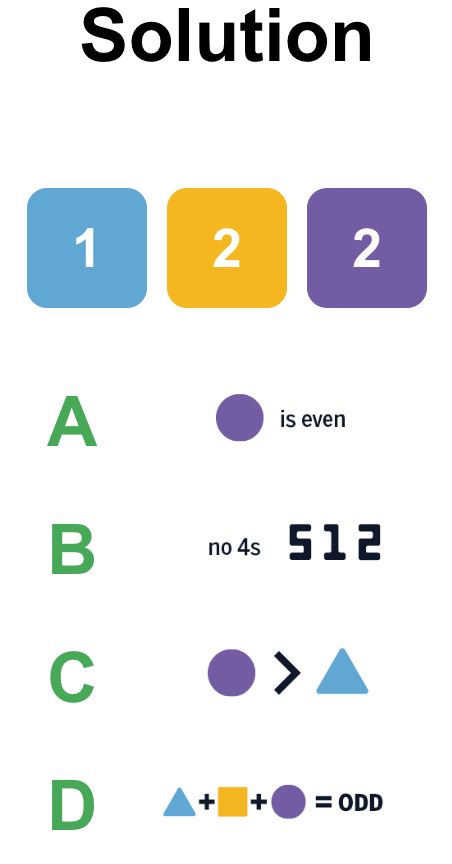
February 16th, 2023
- inspired a bit more about how this could work based on playing The Mind
- you have a similar gameplay mechanic of there being random cards being played in some order that's collectively determined
- but each person has a different condition that the process needs to satisfy
- which could possibly be determined by drawing some sort of card
- although this is MAYBE a pretty big departure from The Mind in that (at least in the variant I played—I believe there's more) there's sort of a single answer to "what order do cards need to be played in?" and so you can't add more constraints because they'd either contradict or be redundant
- in The Mind there's also already perfect info about the ordering function, rather than a discovery process
- ---
- ah, although, if it's not based on getting a perfect ordering but more based on some sort of sequence that maximizes a bunch of different scalar functions
- which could be functions of the (a,b) card order, such that in some cases (b,a) would get a very different output
- basically you have a bunch of moves to play, and each move will gain/lose each player n points
- (or gain lose the team n points... hm. some tough stuff there)
- and you want to sort of max out the total points
December 2nd, 2022
- I have another explanation that seems about as good, and is better in at least one sense: it's at least theoretically possible to build an omniwin-based culture if this explanation holds, which is not true of the classic inherently competitive model
June 13th, 2022
- but I do also find myself feeling like I have directly encountered some sense in which there is a truth about a simple core of alignment, that's something about omniwins / the bit in the middle / upward spiral etc
- this does at least seem true about human systems, in such a way that makes the human alignment problem (re ideologies & institutions) tractable tho difficult
- and if this were more fully understood, we might be able to see how it does (or could be made to) apply to AGI as well
- left hemispherey stuff seems relevant here, as does PCT
March 25th, 2022
- but the point is that the actual skill of finding real omniwins is the hard part
Podcast summaries
- Conversation As Medium solutions are way harder than problems the importance of being able to say that you don't yet know how to solve a problem what does it mean to understand each other compromise is not what everyone wants Everyone is basically living in a dream mashup of their current external situation & old emotional meanings Dialectic Higher Dimensional Thinking, the End of Paradox, and a More Adequate Understanding of Realitywith any misunderstanding, it's possible (& usually worthwhile) to come to a place of profoundly mutually satisfying shared understanding just because someone has an articulation of a problem, doesn't mean their proposed solution is any good solutions are way harder than problems SimPol John Bunzl omniwin perspective-taking Coherence Therapy Questions Are Not Just For Asking the point of friendliness is not to avoid conflict, but to actually create contexts that allow for deeper, more intense, prolonged conflict over the long term the importance of being able to say that you don't yet know how to solve a problem double bind contradiction there's no way to communicate correctly or incorrectly - there's just what works in context and what doesn't work meaning John Vervaeke
- 10:48 - 46:10 - How to approach volatile/heated discussions? Higher Dimensional Thinking, the End of Paradox, and a More Adequate Understanding of Reality just because someone has an articulation of a problem, doesn't mean their proposed solution is any good solutions are way harder than problems compromise is not what everyone wants SimPol John Bunzl omniwin perspective-taking with any misunderstanding, it's possible (& usually worthwhile) to come to a place of profoundly mutually satisfying shared understanding Coherence Therapy Questions Are Not Just For Asking the point of friendliness is not to avoid conflict, but to actually create contexts that allow for deeper, more intense, prolonged conflict over the long term the importance of being able to say that you don't yet know how to solve a problem double bind
July 19th, 2021
- re omniwin / omniwin training game etc
- this post by Tasshin Fogleman has some suggestions for finding win-wins internally or between people
- > Ask one or more of the following questions as generative prompts:
- > Is there a way to meet need 1, without doing X?
- > Is there a way to meet need 2, while doing X?


June 12th, 2021
- use creativity to find win-win solutions to complex conflicts
April 12th, 2021
- oh, there's a version of this that's like a collaborative version of zendo
- if naming words, with conditions
April 10th, 2021
- see recording exploring this with Eric Chisholm on April 9th, 2021
January 28th, 2021
- omniwin relates very closely to post-compromise
deserve is broken
Written to a friend February 9th, 2021 › 2. the other useful frame on this is to think in terms of… › there's a link between this and the old tangled meaning o…
- (morally someone might say I should but the actual issue is whether I'm doing omniwins)