evolution includes WAY more than biological evolution
- evolution, abstractly, is the process by which the sorts of systems that tend to persist and/or replicate (in the system's environment) will tend to be the sorts that there are more of
- and how changes that improve a system's ability to do either of those things will will thereby tend to also persist and/or replicate
- it involves variation and selection
- some process that explores the possibility space
- and some process that causes some pathways
- outline/summary: evolutionary processes are active on all levels of the universe
- meta: this evolutionary universe is itself evolving new forms of evolution
- this should be apparent as you notice below that the first items listed enable the evolution of later items
- it's not a perfect feedback loop by any means
- purposeless evolution
- solar systems (free energy minimization)
- Karl Friston makes a case for how certain processes like primitive evolution apply to the emergence of solar systems
- see his interview with Rhys Lindmark
- I can't articulate this myself adequately but I kinda see it
- early replicators (pre-DNA)
- idk much about these, but there were some molecules that tended to cause similar/same molecules to appear, in certain environments
- biological evolution - the first kind of evolution that [something]'d
- (I'll write later about what the something might be, but there's probably lots of stuff)
- it has gone through several phases, notably
- asexual
- sexual
- multicellularity
- I suspect, in part inspired by Michael Levin's work, that this represents a different class of evolution not just a different class of organism
- among bacteria there's horizontal gene transfer
- note that humans and maybe most/all vertebrates also include microbiomes, which themselves maybe do horizontal gene transfer with microbiomes of other organisms??
- purposeful evolution
- cognition is evolutionary
- Michael Levin also talks about how the organism models itself as an agent and has survival goals etc, and in service of those will pursue aims
- as one of the simplest examples, see the tokyo slime mold
- video
- but then strategicness comes in when organisms have enough of a world-model that they can model the future and escape local optima
- among organisms with brains
- PCT reorganization is an evolutionary process among the brain's neural circuits that converges on whatever solves the organism's needs
- possibly-equivalently though more abstractly, relevance realization, ie a large part of what's involved in consciousness and intelligence, is evolutionary in nature
- occurs primarily within humans, and to a much lesser degree within chimps and some other animals
- probably this version of memetic evolution, where animals learn affordances from each other but don't attempt to copy anything directly or understand it, should have a completely different term for it
- memes are varied (and maintained) and selected according to what their host thinks will improve them
- the question of what criteria is used is its own evolutionary process
- David Deutsch has a detailed model of two main memeplexes
- anti-rational memes, that spread independent of whether they serve the organism spreading them, because they convince the organism they're vital to spread
- rational memes, that spread because they serve the organism spreading them, who thus wants their friends etc to also have the meme
- design is evolutionary
- this is a subtype of memetic evolution, but perhaps worth tracking separately
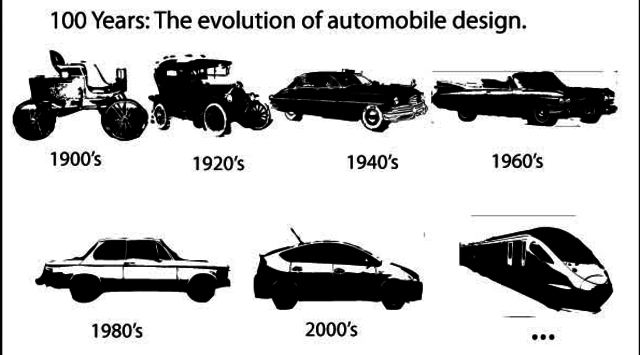
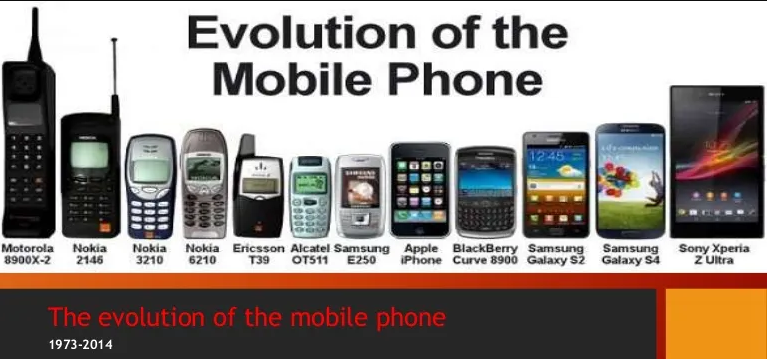
- it's very obvious when you look at it, and we even use it in our language
- if you search
evolution of carsorevolution of phonesyou get appropriate images:
- very related to memetic evolution, but on a larger scale
- see integral stages, spiral dynamics, etc
- see this vid, which also discusses the above levels a bit
2 linked references
October 10th, 2022
- evolution is way more important than most people realize & memetic evolution and I guess most specifically evolution includes WAY more than biological evolution
- came across this article that fails to grok evolution includes WAY more than biological evolution
- > The evolutionary biologist Richard Dawkins (1986) used the analogy of a “blind watchmaker” to describe natural selection: “blind” because it is a mechanical process lacking any sort of foresight, and “watchmaker” because nonetheless, it manages to produce structures (living organisms!) that look as though they were deliberately designed.
- this is a terrible analogy, in that the blind watchmaker is nonetheless purposeful, and in that the watch is in fact deliberately designed!
- like if you saw a watch you'd be CORRECT to assume it was designed
- but moreover, design is evolutionary!! —it's just a purposeful evolutionary process
- In Dawkins' defense, he was responding to another guy:
- > A term coined in 1986 by the British ethologist Richard Dawkins (born 1941) to denote natural selection, alluding to the Argument from Design, an argument for the existence of God put forward in 1802 by the theologian William Paley (1743–1805). Paley argued that if he found a watch while crossing a heath he would conclude that it must have had a maker, because it is too intricate and precise to have arisen by accident, and that for the same reason the intricacy and precision of the works of nature forced him to conclude that they too must have had a maker, namely God; but Dawkins argued that natural selection operates like a blind watchmaker in fashioning the complicated structures of nature.
- but also, Dawkins was the guy who invented the "meme" meme. did he not see its implication here? the correct response to Paley isn't "natural selection is a blind watchmaker", it's "design is like nature—evolutionary—except it ALSO has intent"
- though in some sense most of the intelligence is in the evolutionariness, not in the intent
- (would have to unpack it a bit more, but yeah)
- "blind watchmaker" is sort of a homunculus fallacy, actually
- > It was explained further above that, in terms of reproductive fitness, the evolutionary trend is always upwards.
- sure, IF you assume a constant environment, which is a bad assumption almost to the point of being meaningless
- by environment I don't just mean climate, I mean the entire situation, including competition from predators, prey, and conspecifics (members of the same species)
- ah actually, the meaninglessness creeps in when you assume there could ever be a measurement of "fitness"
- Vervaeke points this out in 2012 paper Relevance Realization and the Emerging Framework in Cognitive Science
- okay the author sorta gets this, but there's still a funny frame issue here
- > The only thing that is constantly improving is the adaptedness of individuals to their given environment. Because the environment changes, this “progress” always remains relative – progress relative to the adaptedness to an environment.
- anyway, gonna stop arguing with this guy, as idk who he is and he's a straight-up reductionist so we've got a pretty substantial worldview gap
- oh ew it's by FRI, the people trying to stop atoms from suffering
- oh and multiple authors, so the evolution one wasn't written by the one who wrote up how reductionism is clearly true and good. still.